
There’s a new rule in the startup playbook: if no one’s watching, no one’s buying. Gen Z founders know this better than anyone. They’re flipping the old-school approach on its head. Instead of spending six months quietly building an MVP in a bubble, they’re spending those six months building hype, posting messy thoughts, testing ideas in public, and building real followings—before they even touch a line of code.
This isn’t vanity metrics or influencer fluff. This is audience-first strategy. The community is the MVP. And if the community bites, the product follows.
Real Startup Growth Stories That Started with Viral Content
The most exciting founders today aren’t coming out of Stanford dorm rooms. They’re coming out of TikTok comment sections. Take Lucie Macleod, founder of Hair Syrup. Her business didn’t start in a boardroom or a pitch deck. It started in viral videos, unfiltered reviews, and thousands of Gen Z women talking about haircare routines. After being rejected on Dragons’ Den, her brand exploded anyway. Why? Because she already had what most founders don’t: a rabid, tuned-in, emotionally invested audience.
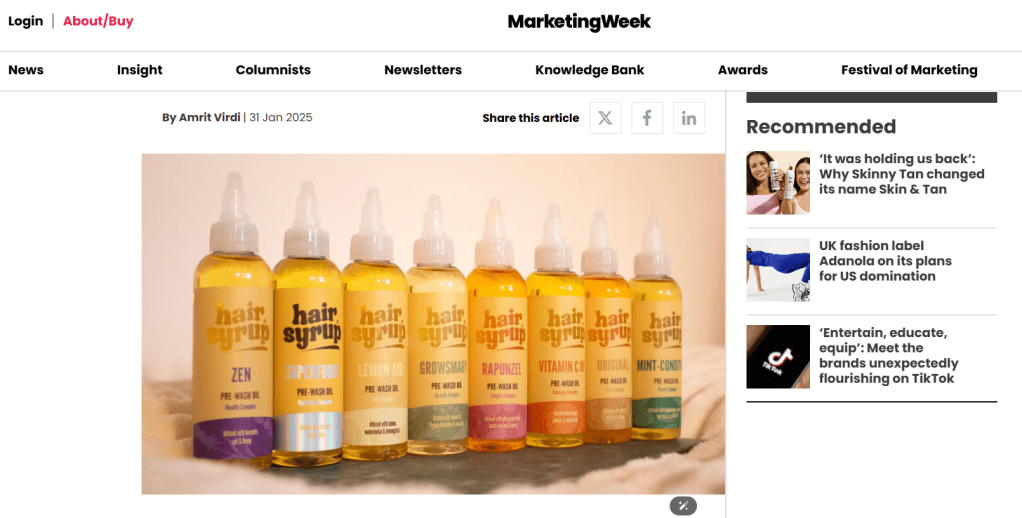
In 2024, Hair Syrup made £4.5 million in revenue. TikTok wasn’t just a marketing channel—it was the foundation. Now, projections say £6.5 million for 2025. That’s not just growth. That’s creator-led domination.
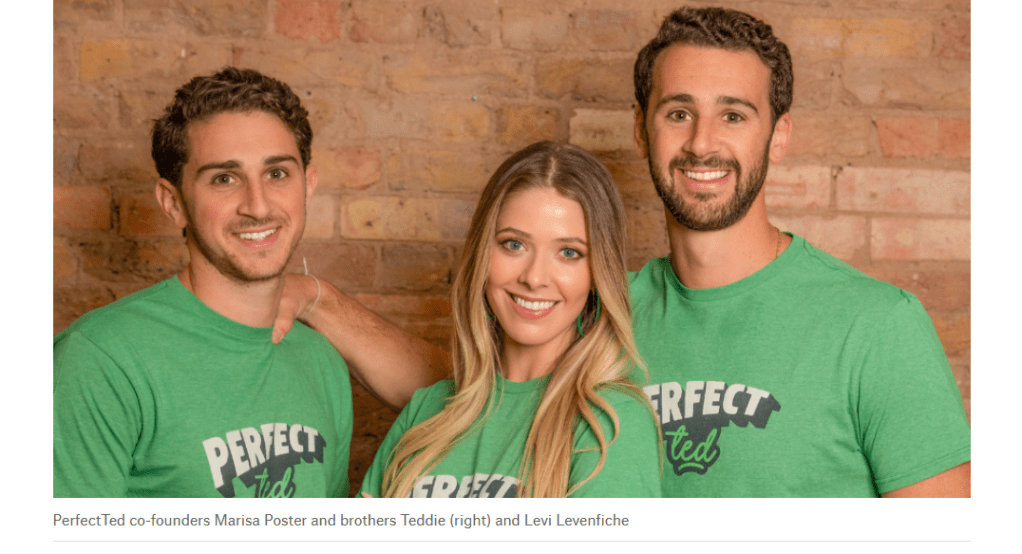
Then there’s Perfect Ted, a startup that didn’t wait for a PR agency to tell their story. They did it live—literally. Their TikTok Live drops drew over 200,000 viewers. They doubled their forecasted sales by turning livestreams into product launches. Think of it as QVC meets Gen Z, minus the cringe.
And these aren’t isolated wins. The entire creator economy is shifting. TikTok-first brands like Delhicious, Skinfluencer, and Poppi are turning short-form views into shelf space at major retailers. Gen Z is turning clout into capital, with better results than a lot of seed-funded tech bros.
Why TikTok Is More Than Just Entertainment—It’s a Real-Time Startup Lab
Let’s be real: TikTok has become Gen Z’s Google. When they want a new supplement, workout, finance hack, or fashion tip, they don’t search—they scroll. TikTok gives startup founders something that SEO and Facebook ads can’t: cultural momentum.
With 1.6 billion monthly users and an algorithm that rewards storytelling, TikTok isn’t just about going viral. It’s a high-speed lab for market research. You get instant feedback, real reactions, and organic growth that can outpace even the best-funded campaigns.
Even better? It’s the perfect testing ground for micro-messaging. Gen Z founders post three versions of a hook and see which one hits. They read comments to refine their messaging. They co-create with their audience in real time. This isn’t spray-and-pray marketing. It’s agile brand-building with the customer involved from day one.
And that customer? They don’t want perfection. They want real. Brands that show behind-the-scenes chaos, messy prototypes, and day-one packaging problems perform better than polished perfection. It’s transparency as strategy. And it works.
The Step-by-Step Formula Gen Z Uses to Build Community Before Product
The traditional startup model says build the product, then the marketing. Gen Z says flip it.
Their model is simple:
Personality → Content → Community → Product
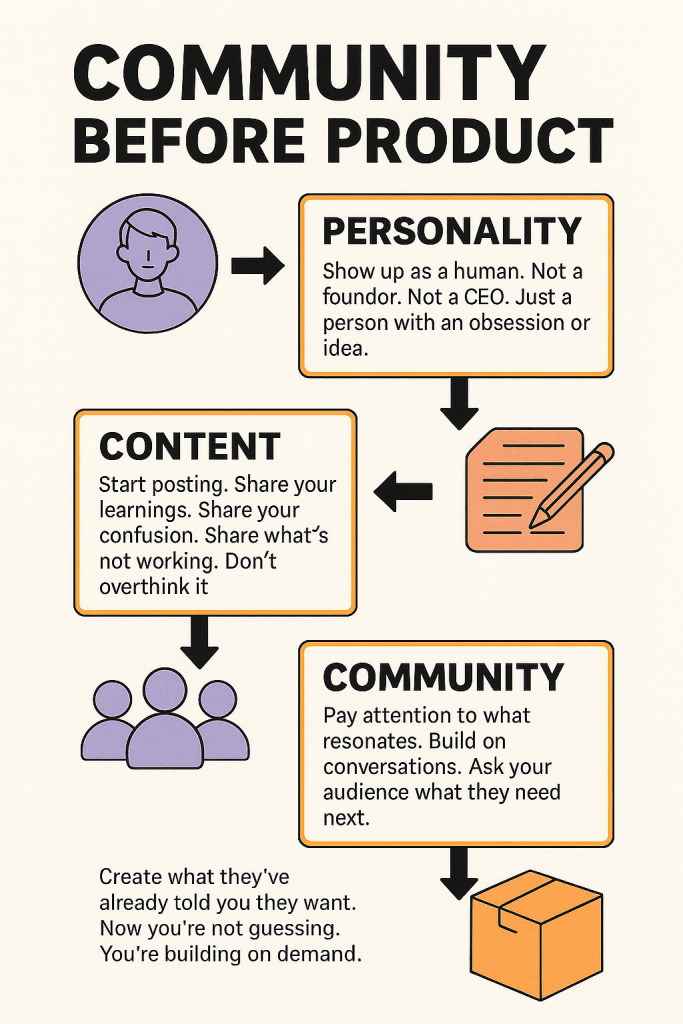
Let’s break that down:
- Personality: Show up as a human. Not a founder. Not a CEO. Just a person with an obsession or idea.
- Content: Start posting. Share your learnings. Share your confusion. Share what’s not working. Don’t overthink it.
- Community: Pay attention to what resonates. Build on conversations. Ask your audience what they need next.
- Product: Create what they’ve already told you they want. Now you’re not guessing. You’re building on demand.
Look at Halara. They use TikTok comments to decide which designs to produce next. Poppi leaned into gut-health memes and aesthetic can design to build a billion-dollar beverage brand.
What makes this model different is speed. Traditional product development takes months of internal meetings. Creator-founders launch ideas in a week, get feedback, then iterate. Their edge isn’t just culture—it’s velocity.
If You’re a Founder, Here’s What You Should Be Doing Instead of Just Building
Let’s get practical. If you’re a founder still waiting for “product-market fit” before you post anything, you’re already behind.
Here’s what to do instead:
- Share what you’re working on even if it’s unfinished. Especially if it’s unfinished.
- Use LinkedIn and TikTok like testing labs. Poll your audience. Ask dumb questions. Spark debates.
- Drop your ego. Let your audience help you shape the idea.
- Build a waitlist or pre-order page as soon as you get your first comment that says “I’d buy this.”
- Monetize small. Create a Notion template, a paid newsletter, or a digital product. Prove someone will pay $10 before you try to raise $1M.
Tools like Beacons, Lemon8, Gumroad, or Substack make this easier than ever. You can launch something useful and get paid while you’re still figuring out what you’re even building.
The new version of product-market fit is vibe-market fit. Do people feel what you’re saying? Are they excited to see you post again? That’s traction. That’s startup energy.
How Gen Z Founders Are Making Startup Announcements Feel Like Movie Trailers
Nathaneo Johnson is a Gen Z founder and Yale student. He launched his AI social network, Series, in a bold way. Instead of posting a boring funding update, he made a short trailer. It looked like a movie, not a business pitch.
The video had campus shots, a voiceover, and cool edits. He told a story, not just facts. The goal was clear: show the vision, not just the product.
He posted it on LinkedIn. It went viral. In 14 days, he raised $3.1 million. Investors reached out to him. People shared the video, commented, and got excited.
This new style works. It’s creative. It builds trust. It makes people feel something. And it stands out in a sea of text posts.
Gen Z founders like Nathaneo are not waiting for press. They are creating their own spotlight. This is not just about being cool. It drives results.
Make your story visual. Make it real. If you want attention, show up in a way people will remember.
Audience-First Isn’t Perfect—Here’s What Can Go Wrong (And How to Avoid It)
Let’s be clear. This approach isn’t for everyone. And it’s not without its downsides.
Content burnout is real. When you’re the face of the brand, the pressure to constantly post, engage, and entertain can become overwhelming.
Authenticity can backfire. If your audience senses you’re forcing it, or if your transparency feels performative, the backlash is swift. Gen Z doesn’t tolerate fake. They want messy, not manipulative.
Platforms can change overnight. TikTok Shop, once the darling of small brands, saw a massive drop in sales for brands like Hair Syrup and Delhicious. Their revenue from the platform fell from 49 percent to 24 percent in a few months. Algorithm shifts are brutal and unforgiving.
So what’s the solution?
- Build owned channels. Start an email list early. Use Discord, Telegram, or Slack to build private spaces.
- Diversify your presence. Don’t rely on one platform. Post on Threads, YouTube Shorts, and even Pinterest depending on your niche.
- Set boundaries. Just because you’re audience-first doesn’t mean you owe them your whole life.
The goal isn’t to be everywhere. The goal is to be consistent, valuable, and human.
Want to Launch Like a Gen Z Founder?
If you’re building something bold but don’t know how to tell the story, I’ve got you.
I’m Binny Agarwal, a content strategist who helps founders turn ideas into scroll-stopping content—whether that’s a viral launch post, a cinematic brand story, or a pitch that actually gets remembered.
If you’re tired of playing it safe and ready to create content that connects, converts, and builds your community before your product drops…
📩 Let’s talk: contentwriter3851@gmail.com
Your story deserves more than bullet points. Let’s make it unforgettable.

 Binny Agarwal